
The 3-Step Archival Triage Framework
When you inherit a tin box or wooden drawer of vintage recipes, the collection is usually a disorganized mix of stained index cards, folded letters, and newspaper clippings. Before doing anything else, follow this archival triage rule:
- Separate handwritten heirlooms from clippings: Old newspaper clippings are printed on high-lignin wood pulp paper. Over time, acids leach into adjacent index cards, turning them brown and brittle. Separate printed clippings from authentic handwriting immediately.
- Never heat-laminate original cards: Thermal lamination heat-seals plastic to cellulose fibers and liquefies vintage ballpoint inks. Use acid-free polyethylene or Mylar sleeves instead.
- Select your core 50 favorites: Most collections contain 200 items, but only 40 to 50 are true family classics (Grandma’s Sunday rolls, holiday pies, birthday cakes). Select the 50 dishes your family actually remembers.
The Permanent Solution: The Hybrid Keepsake Spread
Storing cards in a closet keeps them safe, but nobody can cook from them. Typing them into a generic smartphone app loses the emotional connection to Grandma’s handwriting.
Recipe Restore bridges both worlds with the hybrid two-page spread: your original handwritten card is preserved as an authentic artifact on the left page, paired with clean, cookable typography on the right.
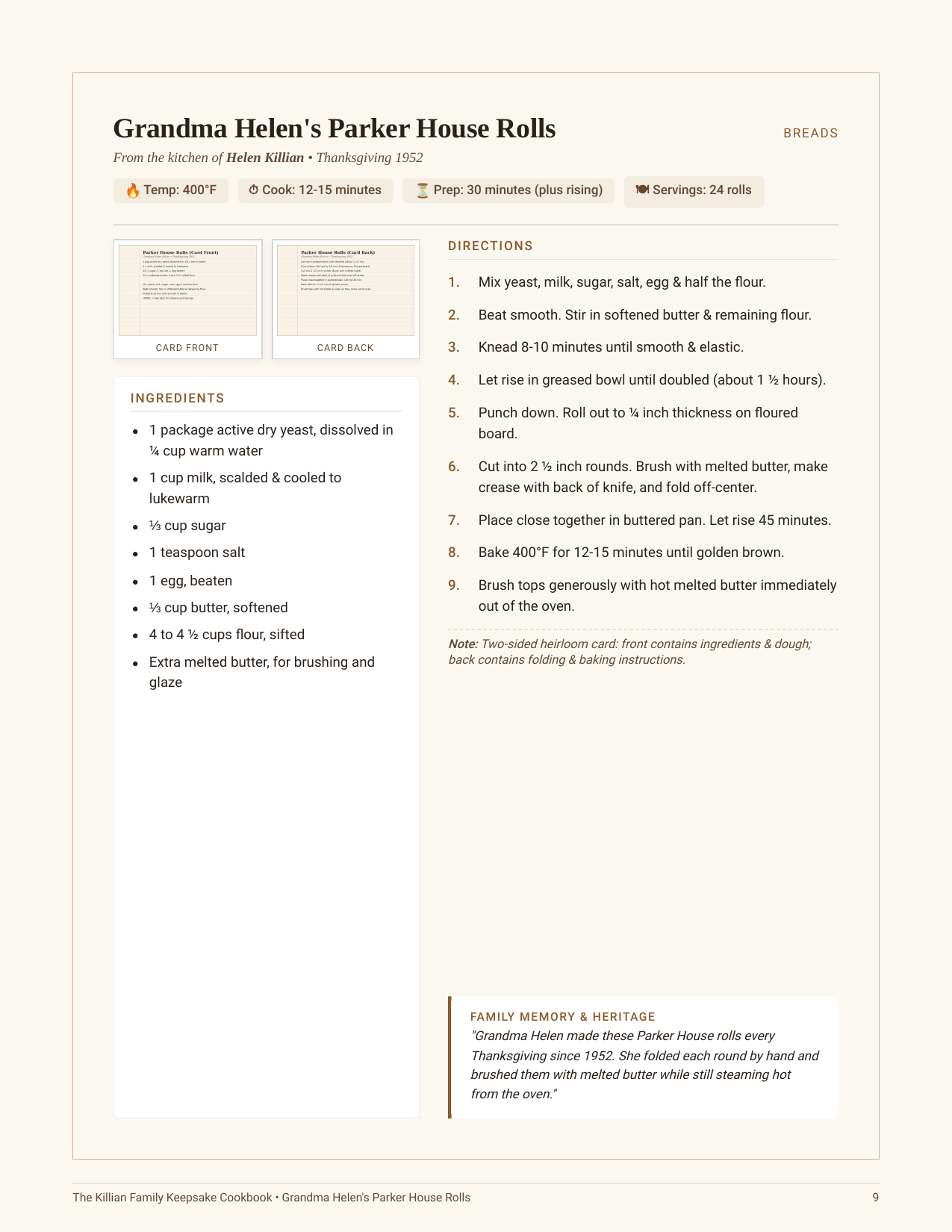
Explore an entire sample book featuring 50 transcribed family recipes: Look inside the sample reader →
Frequently Asked Questions
Should I throw away magazine cutouts and newspaper clippings?
Can I laminate old recipe cards to protect them from grease?
How does Recipe Restore help with an inherited box of recipe cards?
How much does it cost to turn old recipe cards into a cookbook?
Ready to give those old recipe cards a permanent home?
Snap smartphone photos of your 50 favorite cards at your kitchen table. We transcribe the cursive, format the spreads, and deliver a publication-grade PDF cookbook your entire family can share.
Start your family cookbook ($79) →