
Why Thermal Lamination Destroys Vintage Recipe Cards
It is completely natural to want to protect Grandma’s handwritten index cards from pasta sauce, cooking oil, and wet fingertips. But standard home laminators run at temperatures between 220°F and 300°F (105°C to 150°C). When an irreplaceable family card passes through those rollers, three permanent forms of damage occur:
- Adhesive infusion: Thermal pouches do not just enclose paper; they melt an EVA copolymer adhesive directly into the porous cellulose fibers. The bond is irreversible. Any attempt to remove the lamination strips away the paper surface and the writing with it.
- Ink liquefaction and feathering: Mid-century ballpoint inks (popular from the 1950s onward) and water-based fountain pen inks react unpredictably to heat. High temperatures often liquefy ink binders, causing delicate cursive strokes to bleed into purple-black smudges.
- Trapped internal acids: Vintage 3×5 and 4×6 index cards were usually made from inexpensive wood pulp containing lignin and acid. Laminating creates an airtight seal that traps these acids inside. Unable to off-gas, the card accelerates its own chemical degradation (acid hydrolysis), turning dark brown and crumbling inside the plastic pocket.
The Archival Alternative: Safe Sleeves That Conservators Use
Institutions like the U.S. National Archives and the Library of Congress never laminate historical documents. Instead, they use non-destructive encapsulation:
- Archival Polyester (Mylar / BoPET): The gold standard. It is inert, rigid, crystal-clear, and contains no plasticizers. Your card slides in and out freely without heat or glue.
- Polypropylene / Polyethylene Sleeves: Excellent, affordable protection for everyday storage. Make sure the package explicitly states acid-free, PVC-free, and archival safe. Never use cheap vinyl (PVC) sleeves, which release hydrochloric acid over time and turn sticky.
The Real Fix: Keep Originals Safe, Cook from a Keepsake Book
Even in an archival sleeve, keeping original cards on a crowded countertop during Thanksgiving prep invites disaster. The safest strategy is to retire the original handwritten cards to a dark, archival storage box and cook from a high-quality reproduction.
Recipe Restore turns your original collection into a publication-grade PDF cookbook. You take smartphone photos of your 50 favorite cards on your kitchen table. We transcribe the handwriting, balance measurements, and pair each card with a clean, cookable facing page.
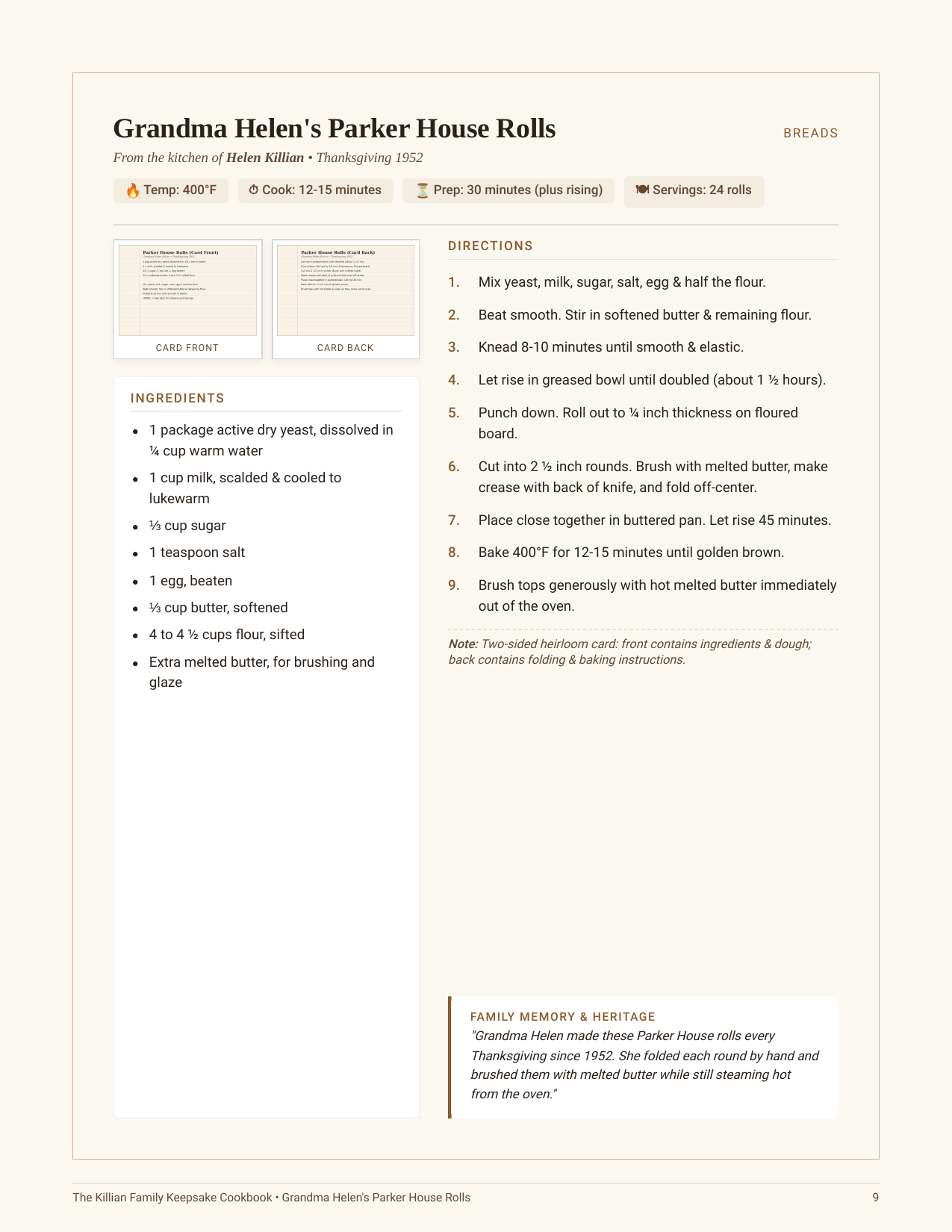
Want to see how an authentic family collection looks when preserved? Browse the 50-recipe sample cookbook reader →
Frequently Asked Questions
Can you undo lamination if a recipe card is already laminated?
Are self-adhesive cold laminating sheets safe for old cards?
What plastic sleeves are safe for family recipe cards?
How do I safely cook with Grandma's recipes without staining them?
Protect your family recipes without risking the paper
Leave the original cards safe in your kitchen drawer. Send us smartphone photos of up to 50 family recipes, and we will transcribe, design, and deliver a publication-grade PDF cookbook for $79 flat.
Start your family cookbook ($79) →