
When you inherit a handwritten recipe box from 1890 through the 1960s, you quickly encounter instructions that seem impossible to follow: “butter size of a walnut,” “bake in a slow oven,” or “one teacup of sweet milk.”
Before Fannie Farmer popularized level cup-and-spoon measures in 1896, and before calibrated thermostat dials appeared on household ovens in the late 1920s, American home cooks relied on tactile visual estimates and household tableware. Use this definitive reference table to decode your family cards accurately.
1. Historic Oven Temperatures (Wood, Coal & Early Gas Stoves)
Early cooks checked oven temperature by holding their bare hands inside the oven door to count seconds, or by tossing a pinch of white flour onto a baking sheet to see how quickly it browned. If your grandmother’s card specifies a descriptive oven heat, use these exact Fahrenheit conversions:
| Vintage Oven Term | Modern Fahrenheit | Modern Celsius | Typical Historic Uses |
|---|---|---|---|
| Very Slow Oven | 250°F – 275°F | 120°C – 135°C | Meringues, fruitcakes, drying herbs |
| Slow Oven | 300°F – 325°F | 150°C – 165°C | Custards, sponge cakes, delicate cookies |
| Moderate Oven | 350°F – 375°F | 175°C – 190°C | Pound cakes, layered butter cakes, casseroles |
| Quick / Hot Oven | 400°F – 425°F | 200°C – 220°C | Biscuits, muffins, pie pastry |
| Very Hot Oven | 450°F – 500°F | 230°C – 260°C | Quick-searing roasts, popovers |
2. Antique Butter & Fat Sizes (Pre-Standardized Butter Sticks)
Individually packaged quarter-pound butter sticks (each marked in tablespoons) were not standardized until the 1930s. Before then, butter was cut from farm crocks or solid blocks using comparisons to produce and eggs:
| Historic Measurement | Modern Volume | Tablespoons | Weight (Approx.) |
|---|---|---|---|
| Butter size of a pea / hazelnut | 1/3 tablespoon | 1 teaspoon | 0.17 oz (5g) |
| Butter size of a nutmeg | 1 tablespoon | 1 tbsp | 0.5 oz (14g) |
| Butter size of a walnut | 1/8 cup | 2 tbsp | 1.0 oz (28g) |
| Butter size of an egg | 1/4 cup (1/2 stick) | 4 tbsp | 2.0 oz (57g) |
| Piece of butter size of an apple | 1/2 cup (1 stick) | 8 tbsp | 4.0 oz (113g) |
3. Liquid Measures: Teacups vs Coffee Cups vs Gills
When an antique recipe card calls for a “cup,” make sure to check which kind of cup was intended. A 19th-century teacup was significantly smaller than our standard 8-fluid-ounce measuring cup:
- A Teacup: 6 fluid ounces (3/4 cup or ~180 ml). If a 1910 cake recipe calls for a teacup of sugar and you use a modern 8 oz measuring cup, you will add 33% too much sugar and cause the cake to sink in the middle.
- A Coffee Cup: 8 fluid ounces (1 standard modern cup or ~240 ml).
- A Gill (pronounced jill): 1/2 cup (4 fluid ounces or ~120 ml).
- A Wineglass: 1/4 cup (2 fluid ounces or 4 tablespoons / ~60 ml). Frequently found in pudding and flavoring instructions.
- A Tumbler: 8 to 10 fluid ounces (approximately 1 to 1 1/4 cups).
4. Forgotten Ingredients & Modern Kitchen Equivalents
Many vintage cards call for commercial products that changed formulation or fell out of production over the last century:
| Antique Ingredient | What It Actually Was | Modern Substitute |
|---|---|---|
| Oleo / Oleomargarine | Margarine made from vegetable or beef fats (popularized in WWII rationing) | Unsalted butter or standard baking margarine stick |
| Sweet Milk | Fresh, unfermented whole cow's milk | Standard whole milk (or 2% milk) |
| Sour Milk / Clabber | Raw milk allowed to naturally sour and thicken | 1 cup whole milk + 1 tbsp lemon juice/vinegar (rest 5 min), or buttermilk |
| Saleratus | Potassium bicarbonate (early 1800s leavener) | Standard modern baking soda (sodium bicarbonate) |
| Cream of Tartar + Saleratus | Early two-part chemical leavener | 2 parts cream of tartar + 1 part baking soda = 1 tsp baking powder |
| Yeast Cake (Compressed) | 0.6 oz square block of fresh perishable yeast | 1 packet (2 1/4 tsp / 7g) active dry yeast or instant yeast |
| Spry | Major rival to Crisco vegetable shortening (1936–1970s) | Crisco vegetable shortening or equal amount of unsalted butter |
| C-Sugar | Historical grade for soft brown sugar | Packed light or dark brown sugar |
Never Lose the Original While Cooking with Clarity
Translating one recipe is an enjoyable historical exercise. But deciphering and standardizing 50 handwritten family cards is an exhausting, multi-week project.
Recipe Restore was designed specifically for this purpose. You photograph 50 family cards with your phone. We transcribe the cursive, verify the measurements, and produce a finished keepsake PDF cookbook featuring the original handwritten card on the left page and the clean, standardized modern recipe on the right page.
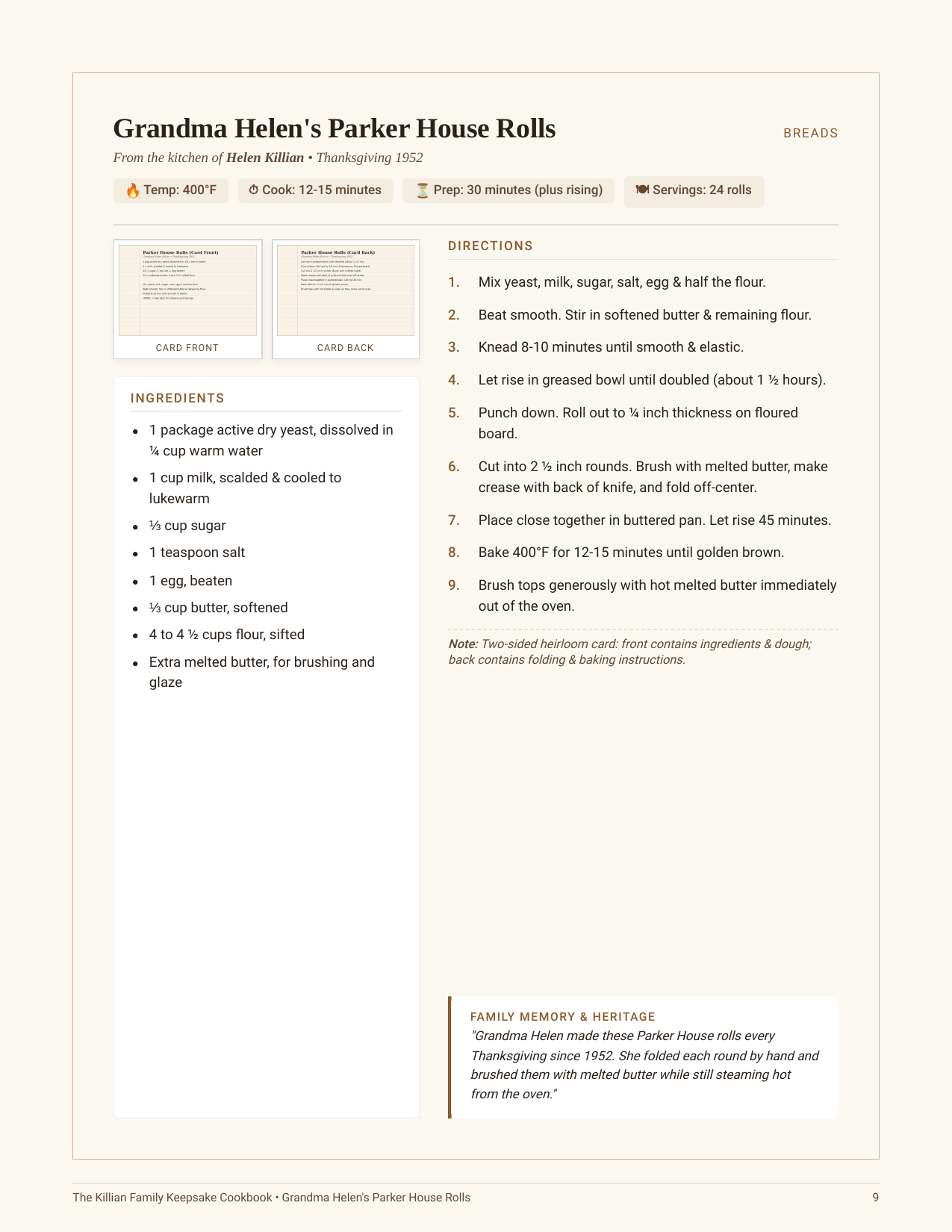
Curious what a fully transcribed 50-recipe heirloom cookbook looks like? Explore the Killian Family sample cookbook reader →
Frequently Asked Questions
How much butter is 'the size of an egg'?
What temperature is a 'slow oven' or 'moderate oven'?
What is 'sweet milk' in 19th and early 20th-century recipes?
How does Recipe Restore handle confusing vintage measurements?
Ready to modernize your family's handwritten recipes?
Keep Grandma’s original cards safe in your memory box. Let us transcribe, translate, and design 50 recipes into a publication-grade PDF cookbook for $79 flat.
Start your family cookbook ($79) →